Thursday, April 29, 2010

Is Haiti's Micro Credit Industry the Path to a Better Haiti?

A new venture between Fonkoze USA and The Toronto, Canada based MasterCard Foundation aims to eventually benefit 70,000 people by offering micro credit to extremely poor women in rural communities in Haiti by helping them to create new livelihoods. The need for a hand-up is great, because since the Haiti earthquake, nearly 600,000 people have migrated to the countryside, creating huge economic and social pressures on destitute communities there.

Fonkoze USA is Haiti’s largest microfinance provider and the $4.5 million "investment" says MasterCard Foundation, aims to "enable Fonkoze’s long-term recovery "by re-establishing its headquarters and branches destroyed in the earthquake."

Exploring the information available on the MasterCard Foundation and Fonkoze websites, it soon becomes apparent that this partnership is an open relationship.

On the one hand, MasterCard is coupled with MasterCard Worldwide – which bills itself as "The Heart of Commerce." In this relationship, MasterCard Worldwide brings home the bacon, having established the MasterCard Foundation with "a generous gift of shares" at its initial public offering in 2006. No need to worry though, Fonkoze, "The MasterCard Foundation is an independent, private foundation with over $3 billion in assets."

Of course, profit margins are the touchstones of a credit card company such as MasterCard Worldwide, so one shouldn't expect that the MasterCard Foundation is any less concerned with the bottom line. In fact, on its website, the MasterCard Foundation, expresses a belief in "market-driven programs" and features a quote by controversial economist Milton Friedman: "The poor stay poor not because they are lazy, but because they have no access to capital."

Mr. Friedman's methodology was laissez-faire economics, which basically "means allowing industry to be free from state intervention. The French meaning of the term "laissez-faire"1 literally means "let it be." It's interesting to note that "some of his [Friedman] laissez-faire ideas concerning monetary policy, taxation, privatization and deregulation were used by governments, especially during the 1980s." Deregulation is seen by many economist as a focus of blame for the current global economic crisis.

On the other hand, Fonkoze, which has total revenues of about $1.7 million, has a rather more altruistic motto: "Building the economic foundations for democracy in Haiti."

Fonkoze is involved in several liaisons – to continue with the French theme. Interestingly, they are linked to USAID and their Canadian counterpart CIDA through their close relationship with Mennonite Economic Development Associates (MEDA).

According to the MasterCard Foundation, "[b]oth organizations have worked closely for more than 15 years. MEDA is an investor and a board member of Fonkoze." On the MEDA website they acknowledge unspecified support from the U.S. and Canadian government: "MEDA gratefully acknowledges the support of CIDA and USAID."

What does non-governmental agency (NGO)2 mean anyway? Evidently, it's complicated.

MasterCard Foundation's Video tells
"the story of how microfinance will help Haiti rebuild."

MasterCard Foundation's global public relations agency, Weber Shandwick, describes the MasterCard/Fonkoze venture this way:
"[...] about the loans, during the course of this program, 4,000 women in two rural areas - Lower Artibonite and the Central Plateau – will receive initial loans of $20-$25, which carry an interest rate of 89 cents. The repayment period – eight months – is combined with intensive literacy and business skills classes, and counseling on how best to invest the loans. Following repayment, the women are ready to join Fonkoze’s microfinance groups, where first loans start at $75.

Fonkoze will also work with another 1,000 women in those area who, according to their wealth rank score, qualify as extremely poor. Working with these women, Fonkoze will help them to determine which enterprise might work for them and provide a needed asset (livestock). As they are trained and begin their businesses, they will be provided a short-term stipend to cover basic needs. They’ll graduate into the program described above after 18 months.

As for local control - Fonkoze was founded in 1994 and currently serves more than 225,000 clients through 41 branches. Its leadership will manage this program in cooperation with Mennonite Economic Development Associates (MEDA), which has operated in Haiti since the early 1980s. So, while the funding for this program was provided by a Toronto-based Foundation, the program will be implemented locally and in accordance with local laws."
They have an interesting way of expressing the interest rate. The interest rate is usually in percentages. Why not express the interest rate in a straightforward manner that everyone can understand? One can only hope they will make their interest rate system clearer for the benefit of their extremely poor and mostly illiterate clients.

"New Interest-Free Microloan Initiative Launched for Haiti"
Additionally, Fonkoze is now part of a new partnership. It is called Zafen. Zafen, an article on HuffPost declares, may just be "the right program" which will benefit everyone. It is "a new interest-free microloan initiative enabling lenders and donors to finance small and medium-sized Haitian businesses."

The four organizations comprising Zafen are:
1) Fonkoze USA – Haiti's alternative bank with 41 branches, 200,000 savings accounts, 47,000 borrowers and 15 years of experience covering rural Haiti;

2) The worldwide Vincentian Family – a network of groups numbering one million strong that derive their inspiration from St. Vincent de Paul;

3) DePaul University – the largest Catholic university in the United States;

4) Haitian Hometown Associations Resource Group (HHTARG) – which enables the Haitian Diaspora to foster economic and social growth to alleviate poverty in their native communities.

A Haitian woman tending her garden is working her way out of extreme poverty with the support of a Fonkoze micro-loan.
(Photo: MasterCard Foundation)

Excellent. No interest micro-loans!

In the interest of full disclosure, Fonkoze's altruistic bankers will have to tell their poor illiterate clients about the new Zafen program, since it offers participants these great "new interest-free" micro-loans.

Reportedly, the Vincentian Family Board responsible for Zafen conceived the program in "meetings with Haitians living abroad [when they] generated the idea of creating a website showcasing sustainable and viable projects and enterprises in need of a loan or donation. [...] These lenders and donors fill the void traditional banks have left in many world economies."

A quick check of the Fonkoze website today (04.29.10), shows that they have not yet announced the new Zafen collaboration. However, Fonkoze is announcing the expansion of their "Financial Services":
Fonkoze Financial Services (FFS) is a Haitian commercial microfinance institution that takes profitable branches and well-tested products from Fonkoze and expands them, reaching hundreds of thousands of Haitians, especially those living in the hardest-to-reach rural areas.

Fonkoze is in the process of spinning off its financial services into a high-growth, full service bank with the mission of providing the rural population of Haiti with a full range of financial services designed to generate self-reliance and promote a democratic economy in Haiti. The name of this institution is Bank Fonkoze. S.A. A commercial banking license from the Central Bank is pending. In the interim, Fonkoze Financial Services was incorporated in 2004 and will undertake all of the operations of Bank Fonkoze until a commercial banking license is granted.
The problem is, Haitians will tell you they already use micro credit businesses like banks. A client may take daily loans or overnight loans from a micro credit entity. In a typical scenario, some of the borrowers are meat sellers who will price a cow or a pig, go get the money from a micro credit place, pay for the animal, then go to a restaurant who had a pre-arranged agreement to buy the animal. The micro credit client becomes a middle man and only spends hours with the animal before selling it. The micro credit outfit makes a handsome profit that same day, maybe in a matter of hours.

The microfinance outfit ACME launched its operations in Haiti with a "$350,000 loan capital grant from USAID" and recently "celebrate[d] 10 years of success[ful]" micro-financing in Haiti:
"ACME’s recent 10 year celebration highlights USAID/Haiti’s 10 years of support to Haiti’s microfinance sector. Founded in 1997, ACME has become a leader in the Haitian microfinance sector, with a client base of 20,169, of which 69% are women, and a total portfolio of $23.2 million as of December 2007. Its list of achievements is even more impressive when considered against the background of Haiti’s economic and political instability during this period. ACME is one of Haiti’s leading MFIs as well as a defining example of USAID/Haiti’s role in building Haiti’s robust microfinance sector and in encouraging growth and geographic expansion."
All of this "commercial" growth and the burgeoning of business partnerships in the name of "charity" and "democracy" is coming on the heels of the disastrous earthquake and there is a term for that – disaster capitalism. It was at work before the disastrous earthquake of January 12 and it is expanding exponentially in the wake of the disaster. The capitalists are descending on Haiti full force to take advantage of the horrific situation. Haitians who don't know where their next meal is coming from, nor when they will have a decent roof over their heads are pitifully vulnerable to these micro credit entities.

NGOs are not a "path to a better life" in developing countries. Back in 2003, then United Nations Secretary-General Kofi Annan revealed: "Funds should be moving from developed countries to developing countries, but these numbers [almost $200 billion] tell us the opposite is happening."

In Haiti and the Aid Racket, How NGOs are Profiting Off a Grave Situation, Nikolas Barry-Shaw of Haiti Information Project (HIP) explains the NGO situation in Haiti:
"[...]Agriculture provides a telling example, as Nazaire St. Fort reports: "[M]ore than 800 NGOs work parallel with the agriculture ministry, but most define their own priorities." The Association National des Agro-professionnels Haïtiens (ANDAH) explains that of the "3.4 billion gourdes (91 million dollars) budgeted for public investment in 2006-2007, 3.2 billion (85 million dollars) are managed by NGOs."

[...]The NGO nexus aims to succeed where repressive force has failed, "killing with kindness" in an attempt to suffocate the vibrant grassroots activity that overthrew the Duvalier dictatorship and brought the Lavalas movement to power. As one Haitian peasant told anthropologist Jennie M. Smith, "They call it development, but it is more like envelopment!

[...] The growth of NGOs and the atrophying of the Haitian state are in reality two sides of the same coin; the role of government is reduced to implementing neoliberal policies favorable to foreign capital while managing the haze of NGOs that effectively run the country, with the UN occupation in the background, ready to dish out the necessary repression."

_________________________
1Laissez-faire economics is the belief that economic imbalances are self-correcting, not requiring intervention by government so long as the equal rights of individuals are respected. The Laissez-faire principle is also referred to as the principle of Spontaneous Order or the Invisible Hand of the Marketplace.

The earliest recorded use of the term "Laissez-faire" in this context may have been by French minister René de Voyer, Marquis d'Argenson, a champion of free trade, in 1736:

"Let it be, such should be the motto of every public power, ever since the world is civilized... A detestable principle that we cannot grow but by the lowering of our neighbors! [emphasis added] There is nothing but mischief and malignity of heart that are satisfied with that principle, and interest is opposed to it. Let it be, damn it! Let it be!!

2 A non-governmental organization (NGO) is a legally constituted, non-governmental organization created by natural or legal persons with no participation or representation of any government. In the cases in which NGOs are funded totally or partially by governments, the NGO maintains its non-governmental status by excluding government representatives from membership in the organization. Unlike the term "intergovernmental organization", "non-governmental organization" is a term in general use but is not a legal definition. In many jurisdictions, these types of organization are defined as "civil society organizations" or referred to by other names.

“True charity is the desire to be useful to others without thought of recompense”
– Emanuel Swedenborg


UPDATE 06.02.2010: The Limits of Microcredit— A Bangladesh Case (PDF)


Tuesday, April 20, 2010

The future of the world in Haiti

Tuesday, January 26, 2010 | By Melanie Newton
Original post at University of Toronto

Many who have followed Haiti's recent political history have a strong sense that the aftershocks of the Haitian earthquake will not be felt in Haiti alone. What happens now in Haiti is a question of world historical significance.

This is not the fi rst time that events in Haiti have served as harbingers for the world's collective future. An anti-slavery and anti-colonial revolution of 1791-1804 created the independent state of Haiti as only the second independent country in the Americas. In giving birth to Haiti, the revolution transformed the sociopolitical landscape of the 19th-century Atlantic world, unleashing forces that would ultimately lead to the collapse of Atlantic slavery. In a repeat of history, the 2010 earthquake has the potential to transform politics in our own times, either for better, or -- if we fail to take the time to reflect deeply on the full meaning of what has happened -- for worse. Together with Haitians, we must all confront the daunting but inevitable question: how do we imagine the future in the face of a catastrophe of this scale?

On Jan. 25 representatives from several national governments, aid agencies and international donors will meet in Montreal to discuss the issue of the reconstruction of Haiti. It is crucial that such bodies, including the government of Canada, acknowledge some of their responsibility for contributing to the recent human catastrophe. The international community needs to base its contribution to reconstruction efforts on respect for Haiti's government and people, rather than the criminalization and unforgivable ignorance that has undergirded foreign engagements with Haiti since the revolution.

Over the years, western destabilization of Haiti has been fostered by a deep culture of racist paternalism. This is evidence of the failure of countries such as the United States, France and, yes, Canada, to come to terms fully with the legacies of their own support for the slavery that the Haitian Revolution so boldly rejected. Engagement with Haiti must be based on a recognition that Haitians do, in fact, know better than we do what is best for the country.

One of the most destabilizing aspects of Haiti's political history has been the use of aid and loans by powerful external donors in order to call the political shots, control Haiti's economy and facilitate the exploitation of its people. In the midst of this crisis, rather than repeatedly treating the Haitian government like a child who cannot be trusted with money, Canada should spearhead a new kind of engagement with Haiti's government based on respect, transparency and a genuine, non-partisan effort to build up the Haitian government's ability to provide services to its people. Foreign governments have repeatedly used the excuse that the Haitian government is too corrupt to be trusted with these funds. At the same time, these self-interested international actors have failed to reflect on their own role in manipulating such a climate of corruption.

The kleptocratic tendencies of Haiti's government were not a serious enough concern to stop billions of dollars being funnelled to Haiti's horrifically violent Duvalier dictatorship from 1957 to the 1980s so long as the Duvaliers remained a bulwark against the possibility of so called "communist" infi ltration of Haiti. Only when it became clear in the 1980s that the dictator had become a force destabilizing the country and damaging foreign interests there did the aid tap begin to dry up.

The first United States occupation of Haiti from 1915 to 1934 laid part of the groundwork for the current disaster. In an effort to facilitate imperial political and foreign economic exploitation of rural areas, the Americans largely rebuilt the infrastructure of Haiti using the forced labour of Haitians. Ever since then the countryside has hemorrhaged people by the millions, creating most of the massive urban slums that dominate Port-au-Prince.

The political and economic infrastructure left behind by the Americans after 1934 was the primary means through which the régime of François Duvalier, which came to power in 1957, was able to establish a degree of violent authoritarian control over Haiti previously impossible for any Haitian government. Under Duvalier the national infrastructure deteriorated and an environmental catastrophe caused by astounding impoverishment accelerated. This centralization of anti-democratic power is a fundamental reason why it has been so hard to transform the political landscape of Haiti and why it has been so diffi cult since the earthquake to bring aid to many devastated areas.

While the reconstruction of Port-au-Prince is crucial, foreign governments must prioritize working in a non-partisan fashion with Haiti's vast network of democratic and popular organizations to revitalize the rural agricultural economy and empower democratic structures and economic life across Haiti. This is a demand long articulated by environmentalists, intellectuals and pro-democracy activists in Haiti, and long ignored both by the Haitian government in Port-au-Prince and by the international community.

Such a reconstruction effort rooted in Haiti's own pro-democracy movements must also be accompanied by the recognition that there are no military solutions to Haiti's crisis. In common with other countries across the Americas that were born out of anti-colonial revolution, Haiti has struggled throughout its history with the challenge of removing the military from civilian government. Repeated foreign interventions have only served to destabilize Haiti and undermine the process of democratic reform. Neither the UN nor individual western countries has ever truly given civilian government in Haiti the support that it requires. The current U.S. and Canadian policy of militarizing Haiti, rather than focusing on public lines of communication with and support for the democratically elected civilian government of René Préval, is a disturbing return to bad habits.

Last, and most important, reconstruction efforts must aim at eliminating Haiti's terrible reality of la misère, the Haitian Kréyol word for the abject poverty that dominates the lives of most Haitians. As long as Haiti remains one of the world's most socio-economically unequal countries, reconstruction efforts in Haiti are likely to re-create the structures exacerbating the current catastrophe. This is not the time to use Haiti as a testing ground for neo-liberal economic policies or to tie the hands of the Haitian government with debt as it tries to rebuild. This would be a recipe for social, political and economic disaster.

For all of these reasons, the future of Haiti is an issue of basic human justice, not just humanitarian concern. Together with Haitians, we all have a chance to imagine a different and more democratic future. Nothing that Haitians demand of their government or the world is particularly utopian -- these are the basic elements of meaningful democratic government and active citizenship.


Melanie Newton is a Barbadian and Associate Professor of History at the University of Toronto. She is a member of the organizing committee for Tet Ansamn: Dyaspora e Avni Dayiti, The Diaspora and the Future of Haiti, a symposium that took place in Toronto April 16-17. The symposium brought together students, teachers, members of the Haitian and wider Caribbean diasporic community to talk about grassroots strategies for a democratic reconstruction process.

Bookmark and Share

Thursday, April 15, 2010

NGOs in Haiti's Goal Should Be "To Put Themselves Out of Business"

Charity vs. Sustainable Development
Repost of Michelle Lacourciere's post on April 14, 2010 at haitirewired.com

DSCN0343Not long ago Bill Clinton, The United Nations Special Envoy to Haiti, urged non-government organizations with a desire to help Haiti to put themselves out of business by fostering a self-sufficient nation. "Every time we spend a dollar in Haiti from now on we have to ask ourselves, 'Does this have a long-term return? Are we helping them become more self-sufficient? ... Are we serious about working ourselves out of a job?'" Clinton said. Sirona Cares has always embraced this philosophy.

Our program, piloted in rural Haiti, is both transferable and scalable. We develop strong relationships with community leaders and help them find the resources to bolster the health and education of the children of their community. Together we work to develop jobs for these children to grow into. Our Jatropha and Moringa project is designed to elevate the income of the rural community without endangering food security or water resources. We are providing the training and micro-financing to help the farmers succeed, and they are so encouraged by this project that regardless of their location (near the epicenter of the world's worst catastrophe), our St. Etienne farmers have begun planting seedlings which sprouted in January. They are on time, and their success, if measured by their enthusiasm, will be fruitful.


READ MORE.

Bookmark and Share

Monday, April 12, 2010

Where's the American Red Cross in Haiti?

The American Red Cross issued it's three month report on expenditures in Haiti recently, but people are asking, where's the American Red Cross in Haiti? After a recent trip to Haiti, Democratic Representative Debbie Wasserman Schultz, of Florida also had her doubts about Red Cross efforts in Haiti. "The lack of a visible presence of the Red Cross even prompted the congresswoman to question whether she could recommend that citizens donate to the group. 'I wouldn't say that,' she said when asked if the Red Cross was the best place for [people] to donate."

"The organization has collected more than $409 million in donations, including more than $32 million from a text message donation campaign facilitated by the State Department and promoted by the White House."

After the Red Cross released a two months report on expenditures it said amounted to 106 million dollars
in Haiti, this video surfaced which sought evidence on the ground of the money spent.

The Red Cross response:
"The American Red Cross has been on the ground responding in Haiti since the moment the earthquake struck and has spent a record $110 million so far for food, water, shelter, health and family services," the American Red Cross said in a statement. "Our efforts have touched the lives of close to two million people."

Those efforts just may not be so visible on the ground, a Red Cross spokesperson told Hotsheet, because the Red Cross relies largely on local Red Cross workers and volunteers. They may not be as conspicuous, but they know the people, the language and the geography, and they have established relationships with other organizations and the government."
Haitians who have been on the ground in Haiti don't see the evidence for these assertions made by the Red Cross. NR, a Haitian-American and Librarian recalls, "I saw two 'local' Haitian Red Cross buildings while in Haiti. They were a disgrace to the organization. What money and aid are being provided to the local chapters were not evident."

A camp inhabitants interviewed in the video above present "cookies" that they were given by the World Food Programme. One resident says the water provided by the Red Cross was giving her a stomach ache. Another said that besides coming around to give water and vaccinations, they have not gotten food aid from the Red Cross. From the makeshift blankets on stilts behind her, the Red Cross is not providing water-proof tents either. The camp is just yards away from Red Cross headquarters in Port-au-Prince. The video was made in March and uploaded to YouTube on April 1st of this year.

tappedoutatRedCross
Tapped-out in front of Red Cross headquarters in Port-au-Prince.

It's clear that the population in the tent cities are being watered and vaccinated, but they feel that substantive nutrition is not being provided? Neither is medical attention. A woman who is suffering with a leg that is broken in two places had not been visited by a doctor, although the Red Cross (across the street) was made aware of her situation.

RespondersTent
A “Responders Tent” sits empty in a camp across the street from Red Cross headquarters
in Port-au-Prince. It was reportedly abandoned just 2 weeks after the quake.

Vaccinations are being done with the stated purpose of stopping diseases, but given the toxins in these shots, there is a potential risk in taking these controversial inoculations

Here are some excerpts from a 1996 Third World Traveler piece called "U.S. AID Go Home" on the purpose of aid and vaccinations in Haiti:
"[...] AID is the primary conduit of a host of health care, agricultural, environmental and economic programs that liberals defend as emblems of the true spirit of American generosity and that Sen. Jesse Helms derides as international welfare, or more specifically, "pouring money down Third-World rat holes." In reality, of course, AlD's humanitarian programs hew closely to the aims of U.S. national security policy, often to the detriment of the people they are ostensibly designed to help. And the agency often plays hard ball with recalcitrant governments of recipient nations. AID, the World Bank and the IMF are holding hostage millions of promised dollars in loans and aid because the Haitian government has not moved fast enough to privatize state industries despite overwhelming opposition among Haitians and their newly elected Parliament to neoliberal economic policies.

[...] AID boasts that it delivers primary medical care to 3 million Haitians through contractors like Boulos' clinic. In fact, it has served to advance a central U.S. foreign policy priority in the Third World-population control. Nearly half of the agency's health care spending in Haiti is taken up by the Private Sector Family Planning Program, under which so-called NGOs dispense birth control methods, and each of the other programs-including the "Expanded Urban Health Services" program, which funds Boulos' CDS-has a substantial family planning component."

and...

[...] Haitian women's health activist Rosann August, who received the Reebok International Human Rights award last year for her work exposing the use of rape as a political weapon by FRAPH and the Haitian military, sums up the link between U.S. political and health policy: "U.S. health policy is from the same agency that overthrew the government. [In Cite Soleil,] they've taken over every thing-health, literacy, justice. Where they've invested millions, there's no improvement in health. Eighty percent of the people are desperate and illiterate, but the programs are cosmetic and immediate. The problem is social inequality."
The bottom line is: the people in the camps should refuse vaccinations for ailments that they might not even contract. Their bodies need to grow their immunity to these viruses and bacteria in order to become immune to them -- and the healthiest way to do that is to catch the virus. Also, vaccines in general contain toxins such as, squalene, mercury, aluminum, formalin, detergents, spermatocides and more. The vaccination being promoted by aid agencies will ultimately hurt Haitians by undermining their personal immunity, sterilizing them (make infertile), raise oxidative stress and deprive them of much needed antioxidants.

RedCross_gaveshots
A woman explains that the Red Cross recently visited the camp to give vaccinations.

What Haitians need and are not getting from these "aid" organizations are high quality nutrition, super foods, vitamins, minerals and trace elements to improve their health and overall resistance to disease. It's infinitely more effective than potentially lethal vaccines or iatrogenic medical drugs.

More reading:
Red Cross under fire! Where’s the money for Haiti?
by Amadi Ajamu | SF Bay View
"The American Red Cross has already admitted to financing its own debt with donations given for Haiti relief."

For more information on the The American Red Cross visit the Charity Navigator website.
Listed are a slew of negative comments about the ARC from their past mishandling of emergency relief services, such as Hurricane Katrina.


Bookmark and Share

Monday, April 5, 2010

"The Quake"– Haiti Through The Distorted Lenses of PBS' Frontline

Marc_Bazin

Marc Bazin: former Haitian Prime Minister
and U.S. candidate for Haitian Presidency in 1990.
If Americans watched the PBS/Frontline documentary "The Quake" last Tuesday, they would have learned that nearly half of all Americans contributed to the Haiti relief effort in the wake of the magnitude 7.0 earthquake that shook Haiti on January 12, 2010. According to Hilary Clinton, the amount donated was over $700 million dollars. So, with such a potentially vast American audience, it would have been great if the writers and producers of "The Quake" had offered a documentary that was not only representative of the immediate aftermath of the devastating earthquake, but was also an accurate historical, political, and economic perspective on what has made Haiti so desperately poor and vulnerable to this "natural" disaster. Instead, Fronline chose to spotlight among others, former World Bank executive, Marc Bazin. Bazin was Washington's candidate in the December 1990 Haiti presidential elections. Bazin was trounced by Jean-Betrand Aristide, who won an easy victory with two-thirds of the vote. Marc Bazin came in a distant second with 14%.

paul_collier

Neoliberal Economist Paul Collier on his UN
role of finding "strategies that gov'ts
would find helpful" in Haiti.
Speaking of elections, perhaps the producers were unaware that Haiti has a popular political party with representatives that they could have tapped to speak on the political issues that this "documentary" attempts to tackle. It is at the very least symbolic that Fanmi Lavalas was also barred from the April 2009 elections and again from this year's rescheduled February elections.

In this regard, Frontline is in line with the U.S. government, which learned a lesson from the 1990 elections. The lesson was that allowing a free election may result in the election of a populous, liberation theology Priest who may advocate for modestly higher sweatshop wages, for building the country's infrastructure and institutions (Aristide founded Haiti's first medical school) and who would want vital services like electricity, mill and cement factories and telephone companies to remain nationalized, not privatized, in order to benefit the local economy and people.
raymond_joseph

Raymond Joseph, is Haitian Ambassador to the U.S. He was
appointed by U.S. backed interim puppet gov't of Gerard LaTorture.
Joseph, who is the uncle of rapper Wyclef Jean, spoke of Haiti's
"proud" and "opulent" heritage during the period of slavery – when
Napoleon Bonaparte's sister had her palace in Port-au-Prince.

If Aristide and Lavalas' plans for Haiti had gone forward, who knows, perhaps the scope of the earthquake disaster would have been lessened. But, rather than include Lavalas's voice as a counter balance to the colonial and "entrenched" narrative, Frontline chose to provide a bully pulpit for Bill and Hillary Clinton, Ban Ki Moon, Edmond Mulet, Raymond Joseph, Jean-Max Bellerive and to trumpet the "economic opportunities" and "very low income area" that is Haiti –– by such luminaries as neoliberal Oxford economist Paul Collier. In Collier's view Haiti is a land of opportunities, no, of course he doesn't mean in the same sense as America is known as "the land of opportunity;" as in people will be flocking to Haiti for a better life, where they will succeed in their chosen field, where they can raise and educate their children to have a promising future. Be for real! What Collier, Bill Clinton and his "twenty" heads of companies and CEOs see is opportunity for the multinational corporations in "agriculture, tourism and especially in manufacturing." The privatization of Téléco (the telephone Co.) it turns out, isn't working out too well and labor organizers say that managers "mismanaged the company in order to justify its break-up." As for the plans for Haiti by the "international community," they are just more of the same.
"In a March 2009 New York Times op-ed, Ban Ki-moon outlined his development plan for Haiti, involving lower port fees, “dramatically expanding the country’s export zones,” and emphasizing “the garment industry and agriculture.” Ban’s neoliberal plan was drawn up [by] Oxford University economist Paul Collier. (Times columnist Nicholas Kristoff admitted, in promoting Collier’s plan, that those garment factories are "sweatshops.")

Collier is blunt, writing (PDF), “Due to its poverty and relatively unregulated labor market, Haiti has labor costs that are fully competitive with China." His scheme calls for agricultural exports, such as mangoes, that involve pushing farmers off the land so they can be employed in garment manufacturing in export processing zones. To facilitate these zones Collier calls on Haiti and donors to provide them with private ports and electricity, “clear and rapid rights to land," outsourced customs, “roads, water and sewage," and the involvement of the Clinton Global Initiative to bring in garment manufacturers.
Revealing the connection between neoliberalism and military occupation in Haiti, Collier credits the Brazilian-led United Nations Stabilization Mission in Haiti (MINUSTAH) with establishing “credible security,” but laments that its remaining mandate is “too short for investor confidence.”
DrShusterandStudent

Dr. Mitchell Shuster works on the foot of Enis Turneau ValBrun,
a sixteen year old who lost his foot when he fell into a hole
while attempting to rescue his sister. Tragically, Enis' sister died.
By the way, that medical school that Aristide founded in 2003 was shut down by the U.S. after the coup they orchestrated against Aristide. The shutting of the school undermined Haitian healthcare and "set the stage for the disaster." The existence of a medical school and trained Haitian doctors would have mitigated the misery and death toll from the disaster. The Haitian medical students who were left stranded by the closure were accepted by Havana’s Latin American Medical School (ELAM). These former students came back and reportedly worked "tirelessly" during the earthquake emergency. The Cubans were the first to set up triages and medical camps to care for the victims of the earthquake. Cuba has a tri-lateral agreement with the governments of Haiti and Venezuela to train medical students. The students are pledged to work in areas where they are most needed in their respective countries.

This Frontline "documentary" relied on the same old colonial narratives. Accordingly, they represented that the "corrupt" Haitians "resisted change," whereas the "reformist," as seen by Frontline, were those bent on instituting harsh structural adjustment and neoliberal policies in Haiti. If you believe Frontlines' rethoric, this heroic "reformist" bunch, have tried unsuccessfully time and again to bring Haiti kicking and screaming into the light of civilization to no avail. Frontline's premise begs the conclusion that Haitians are unable to govern themselves without the benevolent aid and support of the "international community." Half-way through the "documentary," the audience is presented with old footage of the brutal U.S. occupation of Haiti that lasted 19 years. From the old black and white footage, one is left with the impression that the pictures are supposed to represent old and abandoned interventionist U.S. policies, but realistically, was there ever a period in Haiti-U.S. history when Haiti was left to make decisions without the intervention of the U.S. government, its representatives or its allies in the international community?

It is Frontline's version of the political situation in Haiti that some will take the most issue with. In the "documentary" they address the future of Haiti only in terms of what the international community will do for Haiti, but neglect to explore the fact that Haitians are quite capable of determining their own course and finding the path to healing and recovery themselves. This paternalistic attitude is characteristic of the colonial narrative.

If Fanmi Lavalas is barred from any more elections, there will be another boycott and consequently political tension will escalate. Since the earthquake, there have been more than 50 protests. Most have been to protest the inadequate response to the crisis, but many have called for the return of president Aristide. The people want Aristide restored. They want Fanmi Lavalas to take part in any free and fair election. When Fanmi Lavalas was barred last April, the polls were pitifully empty of voters. The Provisional Electoral Council (CEP) could avoid tensions by reversing their course and allowing real elections to take place.

Frontline may have avoided mention of Fanmi Lavalas, but the program did not sidestep political discourse regarding Haiti. Minutes into the narrative, Frontline explains: "There have been a lot of promises made about Haiti in recent weeks, but Haiti has a history of frustrating reformers, absorbing aid and resisting change" Who are these heroic reformers, you may well ask? Some will assume they are those who had just intoned dutifully supportive remarks on behalf of Haiti.
Obama: "To the people of Haiti, we say clearly and with conviction: you will not be forsaken; You will not be forgotten."
Ban Ki Moon: "We are with you. We will help you to recover and rebuild."
Hillary Clinton: "We will be here today, tomorrow and for the time ahead."

These international figures speak a good game, but can they walk the talk? Why are Haitians today not rejoicing and enjoying in the bounty of opportunities, the raised standards of living, safe infrastructure and functional institutions that one would expect is the agenda of "reformers?" Could it be that this was not the goal of neoliberal policies that the U.S. forced the Haitian government to accept? Ironically, Frontline time and again brought up how weak the Haitian government is, but the core purpose or result of neoliberalism is to weaken a government which is subjected to its policies. A weak government will not put up any trade barriers or restrictions to protect its industries. A weak government will be forced to allow the multinationals to flood their markets with imports that destroy the local economy and industry. A weak government will allow the privatizing of local services, even such vital services as safe water, electricity and communications. Did the structural adjustment programs of the IMF, World Bank, IDB and World Trade Organization intend to "reform" Haiti? Yes, but not for the benefit of Haiti, it's government, economy, infrastructure, industries or people. Bill Clinton recently apologized for supporting trade policies which destroyed rice farming in Haiti. The policy led to the loss of an estimated 830,000 rural jobs according to Oxfam. Read more about U.S. trade policy and rice farmers in Haiti at "Harvest of Hunger."
"Shocking though they may appear, the latest round of impoverishing policies are part of a historical continuum in Haiti. Indeed, the presence of U.S. troops in Haiti is not new. In 1915 President Woodrow Wilson sent the Marines into what turned out to be a nineteen year occupation. Both the 1915 and the 1994 U.S. invasions were ostensibly about restoring democracy and stability. But both were in typical U.S. fashion very much about U.S. geopolitical and economic interests. The interests of Haiti's poor majority have consistently been damaged by U.S. military intervention and by U.S.aid programs."
"This and the decimation of the invaluable Creole pig (because of fears of an outbreak of African swine fever), led to displacement of the peasantry into urban areas, along with the promise of urban jobs, fueled rural migration into flimsy shantytowns. It’s hard not to conclude that these development schemes played a major role in the horrific death toll in Port-au-Prince."
Neoliberalism benefited the Robber Barons, not the Haitian people. Once they buy up a national industry, prices doubled, tripled, and quadrupled. Instead of investing in the local economy, these leeches take their profits and go home. What they leave behind are higher costs of living, and worse conditions for people who were living in desperate poverty to begin with. The one notable exception being Digicel, which employs a lot of Haitians and provides dependable cell service in Haiti. So with rare exceptions, these were the detrimental "reforms" that the U.S. wanted Aristide to institute, and when he didn't do it fast enough, the U.S. slapped an aid embargo against a country that their State Department routinely describes as the "poorest in the Western Hemisphere." Heroic wasn't it, to deprive the Haitian people of infrastructure, clean water, and basic social services! After Aristide's government was weakened, the U.S. concluded their orchestrated dismantling of Haiti's democracy by forcing him and his family onto a U.S. plane in the dead of night. They brought him half-way around the world to the Central African Republic, a former colony of France against his will. Later when Aristide was to receive asylum from Jamaica, in direct violation of international law, the U.S. warned him to stay out of the Western Hemisphere or risk "violence."

Watching the section where Paul Farmer briefly spoke about the consequences and misery brought on by a series of unprecedented hurricanes in 2008 in Haiti, particularly in Gonaive, one wonders what he would have said if he was asked to explain as he did in his book "The Uses of Haiti," the U.S. role in Haiti's bitter fate. Unfortunately, Dr. Farmer seems to have lost his voice since he was made Bill Clinton's U.N. Aide. The fact is punctuated when you see the images of Bill Clinton with his arm around Dr. Farmer's shoulders. Clinton's gesture seems to say, see this is my boy now! Dr. Farmer probably couldn't tell you "Who removed Aristide," even if he wanted to.

clinton_farmer

Was this the same Paul Farmer who wrote:
"[…] the Haitian poor know from long experience that they are not supposed to care about democracy. Perhaps post-coup Haiti's symbolic utility is chiefly as a warning to those who dare to care what democracy is. The coup is a warning to those who think that a country's wealth ought to be equitably shared among the people who live there.

Such was the plan of the Aristide government. From the perspective of the Haitian poor, The Aristide presidency, and not the coup, was a rupture with the past. Throughout his adult life, Aristide has made it clear that he thought the uses of Haiti should be altered in radical ways. Inspired by the idea of "an option for the poor. Aristide wanted, at a minimum, to provide a "decent poverty" for the majority of Haitians. This would require, he felt, greater popular input into decision making: it would require an end to the most flagrant injustices and the redistribution of some of Haiti's wealth. The Council of Hemispheric Affairs, noted that Aristide's victory "represented more than a decade of civic engagement and education on his part," heralded lavalas as "a text-book example of participatory, 'bottom-up' and democratic political development."

Constrained by a new world order that was more concerned about making an option for the rich, and constrained too, by his cabinet of moderates, Aristide's government was less about socialism or anti-imperialism than it was about a modest, reformist nationalism. His eight months in office saw significant reforms against tremendous odds. But, as Noam Chomsky has noted, it is precisely such dangerous notions as reform that are most likely to bring down the wrath of the international elite."
-- "The Uses of Haiti" p.195 by Paul Farmer
From Dr. Farmer's take on the situation back in the 90s, to the tea parties, and cries of "you lie," at Obama's first Senate address, to accusations of socialism and even Nazi symbols that purport to describe the current American President, there are a lot of parallels between the claims being made against the Obama administration and similar baseless accusations that were made against President Aristide. Ironically, both men are not extremist, instead they advocate for modest reforms to a corrupt system. Also, similar to Obama, Aristide angered and ignored his base. For Aristide, it was to lead to his downfall. Time will tell with President Obama whether his pandering to the Republicans and right-wing elements will truncate his time in the American presidency.

whitney_macina

There were some good moments in the documentary. The rescuers and medical personnel were authentic and real. Their actions were heroic and they often went beyond the call of duty and showed real leadership and heart. Witlet Maceno, a Haitian-American nurse volunteer was tenacious, gutsy and energetic in seeking out life giving blood for a pregnant woman in distress. Maceno is symbolic of the heros and heroins who volunteered in Haiti and who performed to the best of their abilities with the limited resources they had. Maceno finally found the blood he needed at the Haitian Red Cross in Port-au-Prince. Which is significant, since that particular resource is in-country, and came through for Maceno when others like the Red Cross, and the UN did not.

In fact the UN in the aftermath of the quake failed Haitians miserably. The heroes were those who worked tirelessly on the ground to help the victims, Haitians helping Haitians and those countries which responded quickly, like Cuba, Israel and individuals and international aid agencies from around the world.

Most striking were the statements made by the UN Head of Mission Edmond Mulet. Mulet in effect said that the UN threw up it's hands and "deliberately decided not to coordinate aid. "How can you coordinate, I mean… the border was open with the Dominican Republic. Thousands of volunteers coming in. Airplanes landing. Imagine if the government of the UN or any other organization tried to coordinate that. We would have bureaucratized the process. And I think it would not have been effective. Martin said (perhaps incredulously?), "It would have prevented aid from getting through? Is that what you're saying?' Mulet acknowledges; "We didn't have the capacity to really organize the whole thing. Such good will and generosity from everywhere and I think it would not have been effective."

Mr. Mulet, how effective was the alternative?

clinton_preval

It was instructive to see a photo op in the documentary where the American Secretary of State Hillary Clinton was with President Preval. The faces on both individuals showed the stress and tension each felt towards each other. Frontline's Martin Smith asked Mrs. Clinton about the relationship.

"Is Preval a reliable partner?" asked Smith.

"He is a reliable partner, but he is a partner with very serious challenges when it comes to capacity."

Smith: "What do you mean by capacity?"

Clinton: "Well, that the government has a political structure, and a social structure which is very entrenched in the way it does business."

No kidding. This is coming from a woman who went up against the Washington lobbyists for the health care industry and blinked.

The interview cuts off at this point. I guess the rest is "off the record" as they say? The disembodied Narrator takes his cue from Clinton's remarks:

"What Clinton is talking about is Haiti's entrenched elite. A handful of families who control everything. From the local economy to many key ministries. And while Preval is not considered corrupt himself. He is weak. And many think unlikely to survive Haiti's fall elections."

Good summary Narrator, but not exactly a surprise since Preval has already announced that he would not be seeking another term as president of Haiti.

Since Clinton knows from experience about battling entrenched power structures, why isn't there more cooperation and empathy between President Preval and Secretary Clinton? Probably because "entrenched" power structures isn't the real issue.

What was a surprise was the admission by Frontline, that Preval is not corrupt--deviating from an oft-stated mantra throughout the presentation. They conclude that it is an "entrenched" system, (which is not unlike the system which exists in the U.S. and worldwide when you think about it) where a few well connected families control most of the wealth, industry and power.

aristide_wa

During the presentation, Frontline made a point of noting the negative graffiti that abounds in Port-au-Prince about Preval. A popular one reads: "Preval = K K" – meaning Preval equals excrement. What Frontline cameras did catch, but predictably ignored, underscoring the problem with this skewed "documentary," was the graffiti off to the side. The one that read, "Aristide Wa [King]."

The Quake can be viewed online at the PBS Frontline website.

UPDATE 04.06.2010: The transcript of the Frontline interview with Hillary Clinton is on the State Department website.

UPDATE 04.06.2010 8:02pm:
Haitian Prime-Minister Bellerive revealed this week that Haiti has oil. Contracts have been signed and investments have been made by the World Bank and IMF. "For a project worth billions of dollars."
"Bellerive and a consortium of well-known Haitian figures such as Reginald Boulos, worked on a document concerning the economic future of Haiti. The text does not explore the amazing opportunities offered by the exploitation of Haiti’s mining and oil resources, nor does it mentioned any of the serious studies done on the subject. Instead it presents agriculture as the main alternative to resolve’s Haiti’s problems. By ignoring the question of Haiti’s natural resources, it is as if the message was: there will be looting, pillage but we will give you a little piece of bread. Even more deceiving is that they managed to get the help of left wing Michel Chancy, to caution this masquerade. The paysans may only receive little leftovers from the NGOs but at least they will eat bread…. One bag of rice against one bag of Gold."

UPDATE 04.06.2010 9:16pm:
Statement of Cuban Foreign Minister. H.E. Bruno Rodríguez Parilla,
Minister of Foreign Affairs | Republic of Cuba at UN Donors Meeting on Haiti | UN Headquarters, NY, March 31, 2010
"The international community has a tremendous debt with Haiti where, after three centuries of colonialism, the first social revolution on the American continent took place, an act of boldness that the colonial powers punished with close to 200 years of military dictatorships and plunder. Its noble and hardworking people are now the poorest in the Western hemisphere.

[...] The program for the reconstruction and strengthening of the Haitian national healthcare system, drawn up by the Haitian government and Cuban governments, with the cooperation of the Bolivarian Republic of Venezuela and other countries and humanitarian organizations, will guarantee wide health coverage for the population, in particular the low-income sector.

[...] From almost immediately after the earthquake, Cuban specialists have been dedicating their attention to the population affected. To date they have seen 260,000 patients, performed more than 7,000 operations, delivered close to 1,400 babies, and administered close to 100,000 vaccinations. More than 50,000 patients have undergone rehabilitation therapy and more than 75,000 children have received psychosocial therapy, in the presence of some of Cuba’s most eminent professionals.

A total of 783 Cuban and 481 Haitian doctors, plus 278 health professionals from 28 countries – all of them graduated in Cuba – are working on this program.

[...] During the 11 years of work prior to the earthquake, the Cuban medical brigade, which has a presence in 127 of the 137 Haitian communes, saved 223,442 lives, treated 14 million people, performed 225,000 operations and delivered 109,000 babies. Via the Operation Miracle program, 46,000 Haitians have had their sight restored or improved. During the same period, 165,000 Haitians have become literate in Creole.

If we evaluate the medical services provided in these 11 years and the training of medical personnel in Cuba, it would represent $400 million throughout the period.

The medical program that we are proposing, in its entirety, will benefit 75% of the poorest population of the country at a minimum expense.

We invite all governments, without exception, to contribute to this noble effort. For that reason, we attribute particular importance to this conference, and aspire to its success.

Thank you very much."

Saturday, April 3, 2010

Haiti's HIV Infection Rate Is Not "Highest in the Region"

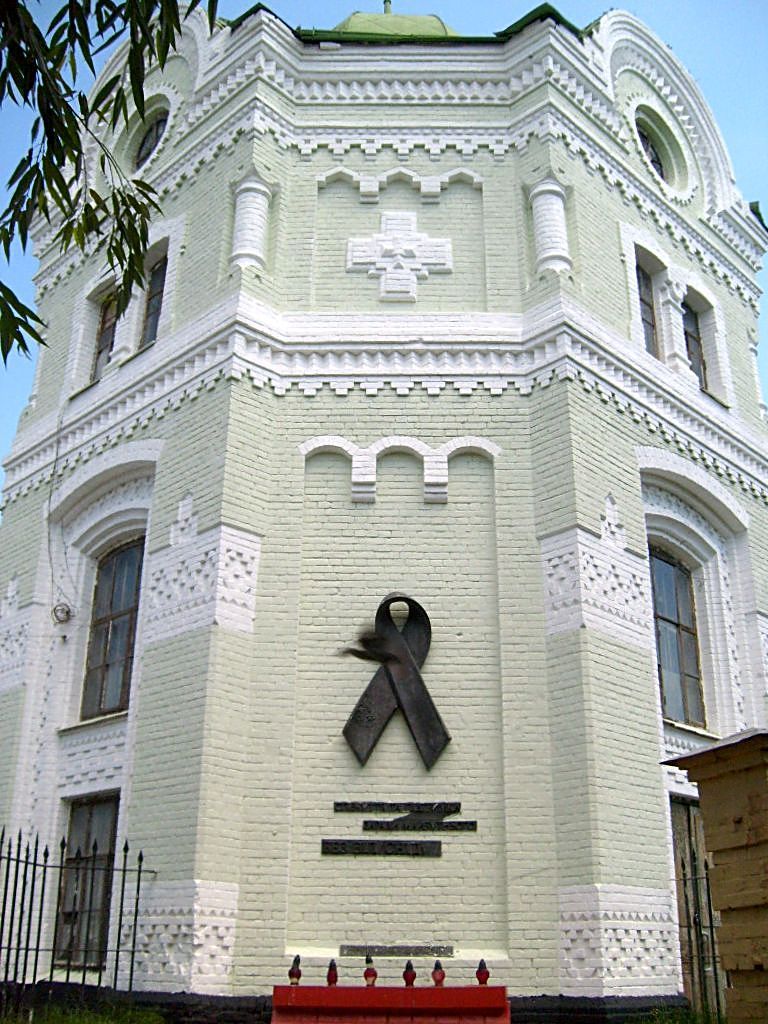
Red ribbon of HIV AIDS
Monument in Kiev
Lately there has been a group of articles about the rape of Haitian women and girls in the tent camps. The security of women and girls is paramount and the Haitian police must provide better protection to Haitian women and girls from this violence so that it is stopped at all cost.

Today I read this Katherine Balwin article from Reuters on the matter which maintained that:
"Haiti has the worst rate of HIV infection in the region and officials fear the quake will set back years of progress in fighting the virus."
– "Rape blights lives of Haiti's quake survivors"
But Haiti does NOT have the "worst HIV infection rate in the region." So we wrote a comment to Reuters as follows:
"This mainstream propaganda about Haiti must stop and editors ought to fact-check before allowing these articles to air with such mistakes. The Bahamas, a member of England's commonwealth of nations with Queen Elizabeth II as head of state (represented by a Governor-General) has the highest HIV rate in the region at 3.3. The same (3.3 rate) as Washington DC where the US Congress sits. Haiti's HIV rate is 2.2."
The large tourism industry from North America and Europe is to the Bahamas, which is the sort of "development" the Internationals and Clinton want for Haiti, accounts for the high HIV rate in the Bahamas.


Sexual violence against poor and defenseless Haitian women and the powerless ought to be decried and prevented at all cost, but the missing part in this article and others like it published lately is the failure to assess the damage to Haitian women, boys and men caused by the systemically abusive role of Catholic priests in Haiti like John Duarte, other US/Euro charity workers and accused pedophiles like Douglas Perliz and the UN in the rape, molestation, food-for-sex, trafficking and molestation of Haiti's people.

The info is readily available on the internet and on HLLN's website.

In fact just today it is reported that former Canadian priest, John Duarte, was sentenced to 18 months in jail yesterday after pleading guilty to sexual interference charges involving three teenage Haitian boys.

Ezili Dantò of HLLN
April 2, 2010

Forwarded By Ezili's Haitian Lawyers Leadership Network


BACKGROUND:

BILL CLINTON on "Meet the Press"(01.17.10) made some misleading statements, including the oft repeated one that Haiti has the highest AIDS rate in the Caribbean.
David Gregory: Look at our experience. Almost a trillion dollars in trying to rebuild Iraq and Afghanistan -- the money that's been poured into Haiti. Why does Haiti matter strategically?

Bill Clinton: Because, number one it has the highest AIDS rate in the Caribbean and our neighbors, we don't want them to spend any money on crushing health burdens, they can avoid. 1 Number two it's the poorest country in the Caribbean and its holding the whole region back. 2 And the Caribbean and Central America and Latin America, they all want to help now. For the first time in my lifetime, they are committed to being good partners with Haiti. 3 And number three, they actually have shown a willingness to change to improve their own circumstances. And therefore if they could succeed where they have failed for two hundred years, that would change our idea of what is possible not just here, but in Africa, in East Asia and everywhere else. they're not… in.. this government has not made excuses.4 They said, we know we've made mistakes in the past, we want to make changes. I have seen them make several changes, since I've been working. That's worth it all over the world.5
Debunking Bill Clinton on Haiti:
2Why Is Haiti So Poor?
The U.S.-Haiti Connection -- Rich Companies, Poor Workers
Latin America's Richest & Poorest
"While Brazil remains the top economy in the region, the smallest economy is no longer Haiti. Now it's Nicaragua that ranks at the bottom, according to a Latin Business Chronicle analysis of the IMF’s latest World Economic Outlook. The IMF expects that to continue this year as well."
NOTE: Gross Domestic Product (GDP) is a subjective indication of a country's wealth and resources. Countries of Latin America, Africa and East Asia which have been deemed "under-developed" and "poor" by Western "economic indicators" are measurably rich in natural resources and human potential.

3Training Haitian Doctors: A Tri-Lateral Agreement Between Venezuela, Cuba, and Haiti
Venezuela Launches 732 New Public Health Works For 2009
Chávez and Venezuela: Duty, not Charity, to Haiti
CARICOM’s Action on Haiti: Honor for a Few, Shame for Most

4Mixed U.S. Signals Helped Tilt Haiti Toward Chaos
(Translation: U.S. financed & orchestrated the 2004 Coup against Aristide)
US Campaign against Haiti: Why?
Haiti: US Undermines Another Democracy
Read more articles at Third World Traveler
History of US Military, CIA Involvement in Haiti
History, Haiti, Interference, the CIA and America

5A Timeline of CIA Atrocities
The Ravaging of Africa :
The ravaging of Africa has been enriching Europe and North America for more than 500 years. First, European empires imposed slavery and colonialism on the continent. After 1945, the United States took over as the dominant neo-colonial power."

HIV AIDS Data and Statistics – People living with HIV AIDS world map in 2008

1From Haiti, a surprise: good news about AIDSA global view of the AIDS epidemic
HIV/AIDS in Haiti

WHO | HIV AIDS Data and Statistics (2007):
Haiti: Estimated number of adults and children living with HIV (pdf)
Bahamas: Estimated number of adults and children living with HIV (pdf)

NOTE: WHO does not have a record of the U.S. "HIV surveillance prevalence by site"6; so while Haiti's and the Bahamas' HIV rates "by site" statistics are recorded when available, no data is listed for "major urban areas" such as Washington, DC, USA on the WHO's global "Epidemiological Fact Sheet on HIV and AIDS".

6 By site meaning "HIV prevalence in different populations." Different populations is defined by WHO as: "The differentiation between the two geographical areas "Major urban areas" and "Outside major urban areas" is not based on strict criteria, such as the number of inhabitants. For most countries, "Major urban areas" were considered to be the capital city and, where applicable, other metropolitan areas with similar socio-economic patterns. The term "Outside major urban areas" considers that most sentinel sites are not located in strictly rural areas, even if they are located in somewhat rural districts."

Washington, DC, USA HIV AIDS Rate:
At Least 3 Percent of D.C. Residents Have HIV or AIDS, City Study Finds; Rate Up 22% From 2006

Bookmark and Share
Related Posts with Thumbnails