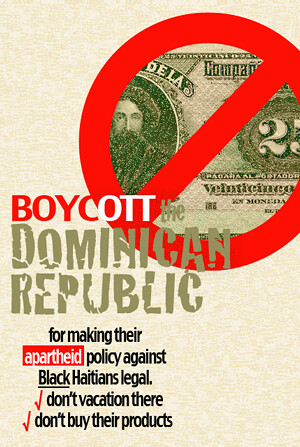
Permission to repost granted by Yvrose Gilles, Bookmanlit

Professor Gates' documentary will be broadcasted this evening [04/19/11] at 8pm on PBS. I think it's important to view the island as a whole unit which has been besieged by political forces both outside and within that are bent on destroying its African heritage.
- –Yvrose Gilles
Professor Henry Louis Gates film “Black in Latin America” could not have come at a more appropriate time. This year, 2011, has been declared by the United Nations to be the International year for people of African descent. It is welcome news in Haiti where generations have celebrated their African ancestry. In part 1 of the documentary, Professor Gates looks at the lives of African descendants in Haiti and in the Dominican Republic. He recounts the history of the island mainly from a Dominican perspective. He refers to the island as “Hispaniola” as named by Christopher Columbus and not as the island of Haiti as it was named by its first inhabitants. The Dominicans prefer the term “Hispaniola”, little Spain, so that they can point to themselves as being of Spanish origin. Professor Gates’ film is important because it opens the gate to an important discussion that is at the root of the island’s division into two countries with differing racial identities. The film itself is groundbreaking in its perspective on the history of the two countries, but it misses important historical details that would have buttressed it further. The objective of this review is to add those details.
 The people of Haiti are the descendants of Africans taken to the Americas between 1502 to 1866 when the world’s superpowers derived their workforce from the buying and selling and kidnapping of people. Haiti was the first modern nation to abolish slavery and to assert the sanctity of human life. So successful was Haiti’s Bwa Kayiman Revolt of 1791, that it ignited a 13 year war which eventually led to the withdrawal of all European slave trading powers from the island. Spain was the first European nation forced to abandon the island. It ceded its part of the island (present day Dominican Republic) to France in 1795 in the Treaty of Basel. The Spaniards were in such haste to leave the warn-torn island that they may have erroneously left the remains of Christopher Columbus in an old Cathedral in Santo Domingo. The British left in 1798 after an unsuccessful attempt to gain control of the island. The French were the last to leave in November 1803, after they were defeated at the Battle of Vertierres. Leaders of the Revolution proclaimed the island’s independence from European domination on January 1st, 1804.
Haiti’s history is an incredible David and Goliath tale of an island nation led by people of African descent struggling to survive in a world dominated by European powers bent on subjugating them. Isolated, demonized, and crushed by extortion and embargoes, the new Haitian state was never really given a chance to thrive by the nations that it defeated.
Internal feuds and nature also took their toll on the developing nation. In 1844, less than 2 years after a devastating earthquake paralyzed the central government, leaders of the eastern part of Haiti declared its independence as the Dominican Republic. Remaining colonists on the eastern part of the island seized the opportunity to secede from a country that had neither protected their social privileges nor given them access to international markets. The extent of the territory controlled by this new Dominican government remained unclear and the economies and cultures of the two countries remained integrated until the US invaded the island in 1915.
 In 1936, under U.S. influence, Haiti and the Dominican Republic reached an agreement over the borders of the two countries. This treaty, signed in the 20th century and called the Trujillo-Vincent agreement, partitioned the island to largely reflect its borders nearly 150 years earlier when the territory was ruled by France and Spain. It was as if the Haitian Revolution had not occurred. Haiti was forced to abandon the notion of the entire island as one country as defined in its original Constitution.
The creation of the two countries from one island has a clear history but historians have distorted that history to support their political agendas. Dominican historians have presented Haiti as an aggressor nation that invaded the D.R. when in fact Haiti simply exercised its sovereignty over territory that it had won from France ever since the 1804 declaration of the island’s independence. Some Haitian historians support the invasion myth even though there was no Dominican state at the time. These Haitian historians find it easier to imagine Haiti as a conquering power rather than realize that it was a besieged country fighting to hold onto its territory.
 Fewer in number and lighter in complexion than the Haitians, the Dominicans became largely a phenotypically mulatto state. Dominican leaders used this skin tone difference to argue that blacks are outsiders and that the people of the Dominican Republic are Indios, the descendants of the native population who were wiped out by the Spaniards by the early 1500s.
In the 1930’s, the Dominican dictator, Trujillo1 took measures to further lighten the skin tone of the Dominican population. Such measures included facilitating the entry into the Dominican Republic of Europeans fleeing Hitler’s Germany and Mussolini’s Italy. At the same time he accused dark skinned people living in the Dominican Republic of being Haitians and slaughtered them. Professor Gates reports that at least 15,000 people were killed. Influenced by Hitler’s arguments about the supremacy of the Arian race, Trujillo commissioned historians to write a history showing that the Dominican Republic was as white a state as possible.
Through schooling and political repression, many Dominicans have learned to reject their African ancestry. Instead they embrace “Hispanicity’’. It is only by speaking Spanish, practicing the Catholic faith, and valuing light skin, do they consider themselves to be truly Dominican.
This year 2011, as the world celebrates African ancestry, we know that many Dominicans and Haitians will want to assert their African ancestry. Although Dominican denial of African heritage is widespread, it is not universal. Professor Gates was able to find an organization in the Dominican Republic calling itself the Kongo Brotherhood. Likewise the assertion of African heritage in Haiti, although widespread, is not universal. Like many Dominicans, there are Haitians who deny their African heritage. Hopefully, by opening up the discussion about African heritage, professor Gates will help people everywhere to recognize that we are all members of the human family and we owe it to the memory of those whose genes we carry to be true to ourselves.
Happy International Year for People of African Descent!
 The people of Haiti are the descendants of Africans taken to the Americas between 1502 to 1866 when the world’s superpowers derived their workforce from the buying and selling and kidnapping of people. Haiti was the first modern nation to abolish slavery and to assert the sanctity of human life. So successful was Haiti’s Bwa Kayiman Revolt of 1791, that it ignited a 13 year war which eventually led to the withdrawal of all European slave trading powers from the island. Spain was the first European nation forced to abandon the island. It ceded its part of the island (present day Dominican Republic) to France in 1795 in the Treaty of Basel. The Spaniards were in such haste to leave the warn-torn island that they may have erroneously left the remains of Christopher Columbus in an old Cathedral in Santo Domingo. The British left in 1798 after an unsuccessful attempt to gain control of the island. The French were the last to leave in November 1803, after they were defeated at the Battle of Vertierres. Leaders of the Revolution proclaimed the island’s independence from European domination on January 1st, 1804.
Haiti’s history is an incredible David and Goliath tale of an island nation led by people of African descent struggling to survive in a world dominated by European powers bent on subjugating them. Isolated, demonized, and crushed by extortion and embargoes, the new Haitian state was never really given a chance to thrive by the nations that it defeated.
Internal feuds and nature also took their toll on the developing nation. In 1844, less than 2 years after a devastating earthquake paralyzed the central government, leaders of the eastern part of Haiti declared its independence as the Dominican Republic. Remaining colonists on the eastern part of the island seized the opportunity to secede from a country that had neither protected their social privileges nor given them access to international markets. The extent of the territory controlled by this new Dominican government remained unclear and the economies and cultures of the two countries remained integrated until the US invaded the island in 1915.
 In 1936, under U.S. influence, Haiti and the Dominican Republic reached an agreement over the borders of the two countries. This treaty, signed in the 20th century and called the Trujillo-Vincent agreement, partitioned the island to largely reflect its borders nearly 150 years earlier when the territory was ruled by France and Spain. It was as if the Haitian Revolution had not occurred. Haiti was forced to abandon the notion of the entire island as one country as defined in its original Constitution.
The creation of the two countries from one island has a clear history but historians have distorted that history to support their political agendas. Dominican historians have presented Haiti as an aggressor nation that invaded the D.R. when in fact Haiti simply exercised its sovereignty over territory that it had won from France ever since the 1804 declaration of the island’s independence. Some Haitian historians support the invasion myth even though there was no Dominican state at the time. These Haitian historians find it easier to imagine Haiti as a conquering power rather than realize that it was a besieged country fighting to hold onto its territory.
 Fewer in number and lighter in complexion than the Haitians, the Dominicans became largely a phenotypically mulatto state. Dominican leaders used this skin tone difference to argue that blacks are outsiders and that the people of the Dominican Republic are Indios, the descendants of the native population who were wiped out by the Spaniards by the early 1500s.
In the 1930’s, the Dominican dictator, Trujillo1 took measures to further lighten the skin tone of the Dominican population. Such measures included facilitating the entry into the Dominican Republic of Europeans fleeing Hitler’s Germany and Mussolini’s Italy. At the same time he accused dark skinned people living in the Dominican Republic of being Haitians and slaughtered them. Professor Gates reports that at least 15,000 people were killed. Influenced by Hitler’s arguments about the supremacy of the Arian race, Trujillo commissioned historians to write a history showing that the Dominican Republic was as white a state as possible.
Through schooling and political repression, many Dominicans have learned to reject their African ancestry. Instead they embrace “Hispanicity’’. It is only by speaking Spanish, practicing the Catholic faith, and valuing light skin, do they consider themselves to be truly Dominican.
This year 2011, as the world celebrates African ancestry, we know that many Dominicans and Haitians will want to assert their African ancestry. Although Dominican denial of African heritage is widespread, it is not universal. Professor Gates was able to find an organization in the Dominican Republic calling itself the Kongo Brotherhood. Likewise the assertion of African heritage in Haiti, although widespread, is not universal. Like many Dominicans, there are Haitians who deny their African heritage. Hopefully, by opening up the discussion about African heritage, professor Gates will help people everywhere to recognize that we are all members of the human family and we owe it to the memory of those whose genes we carry to be true to ourselves.
Happy International Year for People of African Descent!
_____________________
REFERENCES:
1 Trujillo's grandmother Luisa Ercina Chevalier was Haitian, she was the daughter of Diyetta Chevalier, a Haitian who settled in San Cristobal, Domminican Republic.BLACK IN LATIN AMERICA | Interview with Henry Louis, Gates, Jr. | PBS Video
BLACK IN LATIN AMERICA | Haiti & the Dominican Republic: An Island Divided, Black in Latin America, PBS Video